Monday, March 5, 2007

The Jesus Tomb (a.k.a. James and The Giant Fib)

By Lane Palmer
Christian Post Guest Columnist
Mon, Mar. 05 2007 11:04 AM ET

http://www.christianpost.com/article/20070305/26129_The_Jesus_Tomb_(a.k.a._James_and_The_Giant_Fib).htm

Pop quiz time folks:
What if one day you woke up to glaring and blaring headlines that boldly proclaimed that Jesus’ remains were found … what are you feeling? Who would you call? What would become of your faith?
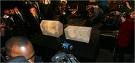
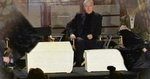
Well by now you are probably aware that Hollywood Director James Cameron is using his Titanic influence to produce headlines just like the ones we just talked about. His scenario is essentially what’s being called the archaeological find of all time.
"It doesn't get bigger than this," said Cameron in a statement. "We've done our homework; we've made the case; and now it's time for the debate to begin."
Alright, so let’s begin the debate. If you’ve been keeping up with the overwhelming response from experts not on the Discovery Channel payroll, you’ve notice that all of them have thoroughly exposed this “documentary” as at best a misinterpretation of the evidence, and at worst a money grabbing stunt that’s piggy-backing on the Da Vinci Code juggernaut.
OK, so I guess that’s the end of the debate … but what’s key here is not winning an argument, but rather recognizing an opportunity. A lot of folks expect us to have a holy cow when the foundation of our faith is called into question, and I’m sure there are many moos to come over the next few weeks … but I have a different response:
Reach out, don’t freak out.
Reach out to your friends and neighbors who have never given the substantial evidence for the bodily resurrection of Jesus Christ a decent look. Share with them great quotes like this one from Lord Darling, the brilliant Chief Justice of England who said, "No intelligent jury in the world could fail to bring in a verdict that the resurrection story is true."
And beyond that, reach out with the facts that give us the highest hope in the universe that there is more than just this life – but an eternal life to come. What facts? Well, to name a few:
• There was a broken Roman Seal. This meant an investigation, an apprehension and automatic death for whoever did it ... so obviously the Roman soldiers didn't break it. The disciples? Right - they were in hiding. • There was a huge stone that was moved uphill. We're not talking about a small boulder here. This was a 3,000-4,000 pound massive hunk of mountain that was supposed to stay where they put it. It didn't. So who moved the stone?• According to followers and enemies of Jesus, there was an empty tomb, and the disciples started preaching about it right away in Jerusalem (where the resurrection happened). They would have been written off as a big joke if the tomb wasn't empty. • The Roman guard split town. This was a death penalty offense - death by being burned alive, I might add. Why would they do that if they could simply produce the body and get off the hook? • Jesus stayed in town for 40 days after He rose from the dead. He appeared to more than 500 people in all kinds of places, times and circumstances. When the Gospels were being circulated, many of these people were still alive. If you thought they might be a joke, you could have simply asked the eyewitnesses.
There was another headline 2000 years ago- that Jesus rose from the dead, and no one has disproved it since … isn’t it time we got the real story out?

Main Scholar On Jesus Tomb Angry Over Unscientific Claims, MSM Takes a Pass

by Terry Trippany on March 5, 2007

http://newsbusters.org/node/11201

By now most of you have heard about the Discover Channel "documentary" fronted by executive director James Cameron that claims to refute conventional religious wisdom on the resurrection of Jesus. Specifically the filmmakers claim that they have scientific proof that Jesus was married to Mary Magdalene and had a son, Judah based on DNA evidence in combination with lexical analysis of names found on a tomb.
Since then the announcement of claims by the filmmakers has been met by scorn and ridicule by scholars of all walks who soundly denounce the claims as one sided speculation at best. But that rarely stops those with an agenda. Instead the doubters are summarily dismissed and often put in unflattering light as if they are the ones who have something to prove.
Even the New York Times gave a semi-honest assessment in their TV review that stated that the film is based on one sided hypothesis. However that doesn't prevent them from injecting some credibility into the documentary with one liners such as the following:
Almost all the scholars interviewed support the filmmakers’ case, though one doubting Thomas is included, David Mevorah, a curator at the Israel Museum. “Suggesting that this tomb was the tomb of the family of Jesus is a far-fetched suggestion,” he says. “And we need to be very careful with that.”
Doubting Thomas, get it? Quaint. Of course this begs the question about the scholars that weren't interviewed.
If we put the New York Times doubting Thomas's beliefs aside however we can peel away the onion that liberals foolishly peddle as truth by turning to the scholars that the religious detractors exclude from their analysis; namely those scholars whose research was critical to the claims made by Cameron and “award winning” investigative journalist Simcha Jacobovici.
Scientific American, no panacea of conservative thought, has a very revealing interview in its March 2nd article titled ‘Says Scholar Whose Work Was Used in the Upcoming Jesus Tomb Documentary: "I think it's completely mishandled. I am angry"’.
The following quotes from the article demonstrate the depth of ignorance that emanates from Hollywood liberals and their cohorts in worlds of journalism and academia.
Of special note was Tal Ilan, whose Lexicon of Jewish Names was essential to the statistical calculation made by Andrey Feuerverger, the U. of Toronto professor of statistics and mathematics who is quoted in the documentary as saying that the odds that any family other than that of the historical Jesus family would have the same names as that family, and be buried in the Tomb the documentary covers, are 600 to 1. In other words, that number argues, the odds are slim that this isn't the tomb of Jesus.
You'd be forgiven for finding such claims far-fetched, and with the exception of the historian, James Tabor, who was consulted for the film, the professionals in the field appear to find these claims no less incredible.
In an interview I conducted this morning, the scholar Tal Ilan, without whose work these calculations would have been impossible, expressed outrage over the film and its use of her work--she's the source of the quotation in the headline of this post.
In other words, despite the overwhelming amount of scholarly claims to the contrary the filmmakers decided to continue along their merry way by teaming up with a few outsiders who would parrot the premise of the film. Thus fiction becomes fact and liberals can sit content that they have attacked another claim of the religious faithful with such "hard hitting" evidence.
There is a deeper importance in the statements made by many of the scholars on which the filmmakers claims are based because they sound eerily similar to those who denounce some of the more far fetched claims made by global warming activists. But why shouldn't it? This is the modus operandi of liberal activism.
For instance, Jodi Magness, a professor of archeology and Jewish history of that period at UNC Chapel Hill said the following in the Scientific American report.
Let me tell you what I think. So first of all if you're writing for Scientific American, so it's important to point out that this debate is taking place in a most unscientific of manners.
Archaeology is a scientific and academic discipline and there are proper fora for these discussions--if you're a scholar and you have something you want to present to the larger world, there are proper ways of doing that, specifically publishing papers in peer reviewed journals or at meetings, so your colleageus can respond to it.
If after that you can go ahead and announce that and people can say "Well I've responded to this," then that's fine. But I've been slammed with [interviews for] this now - it was announced in the public media.
I'm reacting to something that has not been published or peer reviewed and I haven't even seen the film - the entire way this has been done has been an injustice to the entire discipline and also to the public.
I think it's a very important point to make - that this is almost a wikipedia form of scholarship. They're presenting it or setting it up as though we have a discovery and you can react and it's all legitimate and valid which it's not.
She is absolutely correct. Her main arguments about peer review and wikipedia form of scholarship are central to the debate on how liberal activists misrepresent science to further their agenda. This is exactly what is being done on fronts such as global warming and embryonic stem cell research. Those who wish to silence debate are afraid to give a voice to those who have a plethora of evidence that calls their claims into question. Thus they collect a group of like minded individuals, shut down discussion and fund research that supports preconceived notions; a perfect unscientific consensus.
But as they say, never let the facts knock you off your agenda - liberalism depends on it.
It is ironic that a film on religion serves so perfectly to demonstrate the underhanded tactics that liberals use to further their agenda. But it does in the sort of perfect circle that is found on a much more spiritual level than many on the left are able to comprehend.

A TV special fails to unearth convincing tale of Jesus' tomb

Monday, March 05, 2007
By LESLIE PALMA-SIMONCEK
ADVANCE RELIGION EDITOR

http://www.silive.com/living/advance/index.ssf?/base/living/1173100534219690.xml&coll=1

STATEN ISLAND, N.Y. -- Anyone thinking that a two-hour TV special was going to shake the very foundations of Christianity went to bed disappointed last night.
The Discovery Channel documentary "The Lost Tomb of Jesus" made extraordinary claims -- suggesting that Jesus did not experience a bodily resurrection, as a majority of Christians believe.
The documentary, while plodding and liberally sprinkled with commercials, did provide an interesting look at burial customs of first century Israel and it presented a whole cadre of experts in a variety of fields speculating on the possibilities, many of them tantalizing. But none of the evidence was overwhelmingly convincing.
It's rare to find an issue that unifies Christians across their denominational divides, but the so-called Jesus tomb seems to have accomplished just that.
The most liberal Mainline Protestants to the most passionate evangelical Christians all greeted with deep skepticism the news that a 1980 archaeological dig in Jerusalem unearthed 10 burial boxes, or ossuaries, that contain not only the bones of Jesus, but also those of his presumed wife, Mary Magdalene, and their son, Judah.
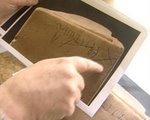
DNA tests performed on remains of the box with the inscription "Yeshua, son of Yosef," -- or Jesus, son of Joseph -- and the one marked "Mariamne," a woman believed to be Mary Magdalene, concluded that the two did not share the same mother and thus must have been husband and wife. It was too much of a leap, and a panel discussion after the show, moderated by Ted Koppel, took Israeli-born filmmaker Simcha Jacobovici to task on the point.
The show, produced by James Cameron of "Titanic" fame, built in its own critics, whose certainty that the bones are not that of Jesus seemed more credible than the arguments of those claiming they are. "The Lost Tomb of Jesus" provided some tricky moments for Catholic parents watching with their children.
The filmmakers presented as established fact that Jesus had two sisters and four brothers, and while these siblings are mentioned in the Gospels, Catholic teaching has always held that Jesus' mother Mary remained a virgin throughout her life, and that these siblings were actually cousins.
The very mention of the possibility that Jesus himself could have been married and fathered a child borders on blasphemous for many Christians, although the most liberal denominations have no trouble accepting such a concept.
The documentary tossed a bone or two, if you will, to those who believe that women played a much more prominent role in the early church. In its sometimes hokey dramatizations, Mary Magdalene was shown preaching and teaching, and Jesus' mother Mary also was shown as a powerful leader after Jesus' crucifixion.
But these are not new theories and don't require the bones of Jesus to back them up.
The documentary opened and closed with an invitation for viewers to use their own judgment in deciding whether or not to believe its radical claims, and at a gathering earlier in the day yesterday, 60 people, most of them Episcopalians, already had made up their minds.
"It seems to me people are looking for a secular Jesus," Rosemary Loffredo of Grymes Hill said. "This is all a little annoying."
Ms. Loffredo had come to Canterbury House in Rosebank to hear New Testament scholar Dr. Deirdre Good discuss the non-canonical gospels, accounts of Jesus' life, ministry and teachings that were not included in the Bible.
Dr. Good, whose books include one on Mary Magdalene and a new one called "Jesus' Family Values," sided with the skeptics.
"There are so many problems with the evidence of the tombs," said Dr. Good, citing the inconclusive DNA results and a simplistic statistical analysis of the likelihood of the names of Jesus' family members -- including his parents, Joseph and Mary -- appearing together.
Buy beyond questioning what modern science can discover about a 2,000-year-old family, she said it was unlikely Jesus would have been buried in Jerusalem.
"I don't think this is Jesus' family," Dr. Good said. "Jesus family is in Galilee. If the inscription said Jesus of Nazareth, I would be much more persuaded."
Her audience agreed.
"Ridiculous," said Great Kills resident William MacDonald, a Catholic who holds a divinity degree.
"If you look at the history and the scientific research, it really causes me to doubt the authenticity," said Deacon Geraldine Swanson of the Church of the Ascension in West Brighton.
Dr. Good noted that the season of Lent, when even the most lapsed Christians draw closer, if fleetingly, to their faith, is often when the most radical theories are proposed. Last year's explosive Lenten discovery was the Gospel of Judas, which initially seemed to suggest that the disciple who sold Jesus out to the authorities was not the villain of the Easter story.
The year before that, it was the novel "The Da Vinci Code," which also theorized that Jesus married Mary Magdalene.
"It's all hype," said Ms. Loffredo. "It's all publicity."

Examining the 'Jesus Tomb' Evidence

By Jay Cost
Mon Mar 5, 11:30 AM ET

http://news.yahoo.com/s/realclearpolitics/20070305/cm_rcp/examining_the_jesus_tomb_evide

I. Introduction
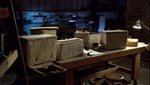
In 1980 an ancient tomb was found in Talpiot, a Jerusalem neighborhood. It contained 10 ossuaries (bone boxes) dated roughly to the time of Jesus of Nazareth. One was inscribed "Jesus son of Joseph," two were inscribed with slightly different versions of "Mary," one with a slightly different version of "Joseph," one with "Matthew," and one with "Judah son of Jesus." Four bore no inscriptions and which went missing. Last night , Simcha Jacobovici, Charles Pellegrino, and James Cameron presented a Discovery Channel documentary that argues that this tomb belongs to Jesus of Nazareth (henceforth just Jesus), whom Christians believe is the resurrected Son of God.
The documentarians' claim is not valid. The Cameron-sponsored Jesus Family Tomb proffers a specious claim based upon bad theory, bad statistics, and bad history. A careful examination of their evidence demands that their claim be rejected.
II. Chemical Evidence?
Several years ago, an ossuary was found, independent of Talpiot that bears the inscription, "James son of Joseph, brother of Jesus." The antiquities dealer behind the "James" ossuary is currently on trial in Israel for running a forgery ring. Nevertheless, many scholars believe that the "James" ossuary is legitimate and that it will be vindicated. This is the position of the documentarians, who further claim that the "James" ossuary is the missing tenth ossuary.
Their evidence is twofold: (1) the size of the "James" ossuary is the size of the ossuary from Talpiot, and (2) the chemical residue, or patina, found on the "James" ossuary is consistent with the chemical residue on the ossuaries from Talpiot.
The second is peculiar. The documentarians claim to have developed a new procedure known as "patina fingerprinting." This shows a high correlation between the patina, or chemical residue, on the "James" ossuary and the patina from Talpiot. They infer from their procedure that they have "matched" the "James" ossuary to the Talpiot tomb. However, the data they provide falls far short of this claim. In their book, they report comparisons of the "James" and Talpiot patinas to eight patinas from other environments. Five of these are, according to the documentarians, not similar to the environment at Talpiot. However, all control samples should have been taken from a similar environment. It is a waste of time to test patinas known to have been from radically different environments than the "James" and Talpiot patinas. This is especially necessary considering that the type of soil at Talpiot - terra rosa - is not uncommon in Jerusalem. Indeed, the only appropriate test is to test patina from all places where terra rosa is known to be. Why waste time and resources on other environments? At least as far as their book goes, the documentarians tests are insufficient to prove that the "James" ossuary came from the Talpiot tomb.
In addition, one cannot in a single trial (a) test the validity of a new methodology and (b) apply it. How do we know the method is valid? It proved the two patinas to be similar. How do we know the two patinas are similar? The method proved it. This is circular, which is why the documentarians first must show that the "fingerprint" correctly identifies all sorts of items whose origins are known.
Generally, their reported results are far from convincing. There is nothing but anecdotal recounting, not the sort of systematic presentation of evidence required to make the claim they do. Furthermore, it is inappropriate to announce results like this to the general public, which lacks the expertise to evaluate the claim, without first having it thoroughly vetted by scholars and experts.
Thus, the documentarians only show that the "James" ossuary could be from this tomb. Beyond that, theirs is an argument from silence. Unfortunately for them, the record is not silent. Consider:
i. The Talpiot tomb was discovered in 1980. Just last month, a photograph dated prior to 1980 emerged that clearly shows the "James" ossuary.
ii. The earliest tradition regarding James indicates that he was buried near the Temple Mount, some distance from Talpiot.
iii. Ben Witherington, one of the principal scholars of the "James" ossuary, has statedthat the soil within the "James" ossuary does not correspond to the soil at Talpiot. Rather, it corresponds to an area that is consistent with the original tradition regarding the burial site of James.
iv. Two of the original archaeologists of the Talpiot tomb - Amos Kloner and Joe Zias - claim in no uncertain terms that the "James" ossuary is not the tenth missing ossuary. Instead, they say, the missing tenth was bereft of all inscriptions, names or otherwise.
v. Amos Kloner also claims that the tenth ossuary is a different size than the "James" ossuary.
vi. The documentarians largely rely upon Kloner's initial research into the ossuaries found at Talpiot, except when he disagrees with their thesis about the "James" ossuary. One cannot variably accept and reject a source based upon how well it supports one's claim.
III. Statistical Evidence?
The documentarians offer statistical analysis proving beyond a doubt - a 599 in 600 chance, they claim - that this particular tomb was Jesus'.
In actuality, this number is merely the reworked probability that any set of four people from the time will have four names - "Jesus son of Joseph," "Joseph," "Mary" and "Mary." It does not speak to the probability that this tomb was Jesus'.
Even so, it could, in theory, be helpful for indicating the number of candidates for this tomb who are as "qualified" as Jesus. Unfortunately, the theory upon which the calculation is based is hopelessly misguided. There are three major problems with it. (1) As I shall make clear later, there is no reason to include the second Mary in the calculation; and (2) this is a multi-generational tomb that could contain, according to New Testament scholar Richard Bauckham, up to 35 people. Thus, if one is interested in finding the population of people who are at least as likely as Jesus to be in this tomb, one must find the number of people named "Jesus son of Joseph" who would have at least two family members, out of 34, whose names correspond to the six names in the tomb. Finally, (3) it treats the incidences of "Jesus son of Joseph" and "Joseph" as independent events, which is not appropriate; the observation of one increases the likelihood of observing the other. The same also for the incidences of "Mary," which are not independent.
When these factors are considered, the following is clear: Virtually everybody named "Jesus son of Joseph" is as good a candidate for this tomb as Jesus. And, for that matter, a strong majority would be a better candidate. For instance, more than 97% of all people named "Jesus son of Joseph" would be expected to have at least two women named Mary among 34 relatives. When we factor all of the different ways to combine the five names in this tomb, we can be sure that this tomb could belong to anybody named "Jesus son of Joseph" -- at least 141 people from the time period. This, in turn, means that a majority would be a better candidate for burial because they would have more names than Jesus.
Can we actually derive a probability that this is Jesus' tomb? We can, if we consider the tomb in light of the historical record. It is relevant on two points.
First, it seems highly unlikely that Jesus would be a candidate for burial in this tomb. This is the case for at least six reasons.
i. Few scholars - including those who think Jesus was not bodily resurrected - believe that he was buried at all. There is good reason for this. The earliest testimony indicates that the tomb was empty. Later testimony is consistent with this. This testimony further indicates that all parties - the Romans, the Jewish temple authority, the Christians - agreed that the body had gone missing.
ii. Even if we assume that Jesus was buried, it is exceedingly unlikely that he would be buried in or around Jerusalem. Everybody had an interest in finding his body. It would have been a prize "get" for early Christian opponents - who were of course centered in Jerusalem - to produce it. How did they miss it when it was so close by? One would expect the Jesus family tomb, if it did exist, to be either in the north (the family's first century A.D. home), or in the south (the family's ancestral home). There is no reason to expect it to be in or near Jerusalem. Indeed, one of the contributing experts on this documentary, Professor James Tabor, the only one with academic credentials in New Testament studies affiliated with this documentary, just last year publisheda work asserting that Jesus was buried in Galilee.
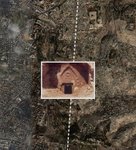
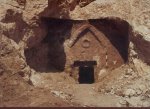
iii. This pictureof the exterior of the tomb shows that it is ornately decorated. This tomb is not secretive. It is not possible to bury a person outside, but the Jesus in this tomb comes close. Again - how could Jesus, the production of whose body would have saved certain authorities many headaches, not have been unearthed from this tomb prior to 1980?
iv. Jesus' was a lower-class family from Galilee. Where did they acquire the resources to purchase what the original investigators call a tomb for a middle-class family?
v. The ossuary in question is unadorned. It bears only chicken-scratch writing that simply says, "Jesus son of Joseph." Most scholars consider Jesus minimally to have been a teacher, probably a healer, with a devoted following. Would his followers have treated him so shabbily in his internment, considering how much care was taken to anoint the body? Meanwhile, other ossuaries found at Talpiot are well-adorned, with names not so carelessly scratched into decorated ossuaries. Why would his followers give a more "worthy" box to others?
vi. The name on the ossuary, "Jesus son of Joseph," was not how followers addressed Jesus. As a matter of fact, this is what Jesus' opponents called him.
Second, the tomb includes people who, at least according to the historical record, should not be there and it lacks people who should be there.
There is no historical evidence of any kind that indicates that Jesus had a son named Judah or a close relative named Matthew. Actually, Jesus had two ancestors named Matthew. If we follow the genealogies in the Gospels Matthew and Luke, two great-grandfathers were named Matthew, but they would either have been buried in the north or the south. Interestingly, he did have a maternal aunt named Mary. However, the documentarians conducted mitochondrial DNA testing on remains from the "Jesus son of Joseph" ossuary and the second "Mary" ossuary. They found that the two are not matrilineally related. Thus, their hypothesis - that this is Jesus' family tomb - fails to account for three of the six ossuaries.
The documentarians argue that the specific spelling of the second "Mary" ossuary is consistent with a spelling of Mary Magdalene's name found only in the so-called "Acts of Philip," an apocryphal document produced sometime in the fourth century. Thus, they infer, she was his wife. However, the use of this document is not valid as an estimator of Mary's name. It was written some 200 years after she would have expired. How would the author of this know what she would have been called by her contemporaries? If he did know, why would prior writers - temporally closer to Mary - not use the same name? And, furthermore, while a few fringe scholars have suggested that Jesus and Mary were married, the overwhelming majority reject the thesis. Thus, one must conclude that the second "Mary" ossuary is a surprise.
Meanwhile, what about those who are missing? Where is his father Joseph? Where are his brothers, James, Simon and Jude? Where are his sisters? Where is his aunt? Of at least 9 people known to have been in Jesus' family, we only have three ossuaries. The "1 in 600" figure supposedly takes into account the missing names. The documentarians increase the base likelihood - 1 in 2.4 million - by a factor of four to account for what they call "unintentional biases" in the historical record. This is an ad hoc, insufficient, and inappropriate way to deal with the fact that 75% of his known family is missing. What is more, the extent to which this changes the probability is more than lost by the fact that they have included the second Mary in their analysis (which lowers the probability by a factor of 160). At any rate, there is a proper way to deal with the absence of six family members, and this is not it.
All of this contrary historical evidence has the potential to create a major problem for the documentarians. To see this, let us calculate the probability that this is Jesus' tomb with all of the information - for and against - now laid out.
We will use Bayes' theorem, which is a way to calculate the probability of a former event occurring (in this case the burial of Jesus in this ossuary) based upon the occurrence, or non-occurrence, of a latter event (in this case, the burial of the others in this tomb).
This is technical but bear with me. The documentarians take advantage, intentional or not, of the fact that the public does not understand statistics. Statistics themselves do not lie. They are only misused, which is what has happened here. To put things right, Bayes' theorem states:
Probability that this is Jesus' ossuary, given the other names equals
Probability that this is Jesus' ossuary multiplied by
Probability of finding the other names, given that this is Jesus' ossuary divided by
Probability of finding the other names.
It should be clear that the documentarians offer nothing approaching this. Their figure, 1 in 600, does not speak to any of these factors.
Examine the equation in light of our discussion of the historical record. Suppose that we found Jesus' ossuary in a tomb. What is the probability, based upon what we know about Jesus from the historical record, that he would be buried with these people? It is zero. There is no reason, independent of the tomb, to expect a Matthew, a son named Judah, or a second Mary. There is reason to expect at least six other names. Thus, the third term drops to 0. And, accordingly, the probability that this is Jesus drops to 0.
Now consider the probability that this is Jesus' ossuary, which is the probability that an ossuary found in this environment inscribed "Jesus son of Joseph" would belong Jesus. This term is 0, too. There is no reason, independent of the tomb, to expect him to have been buried at all -- buried in Jerusalem; buried in a middle class, ornamented tomb; and buried in an unadorned ossuary with this inscription. Hence, the second term drops to 0, too.
It is idle for the documentarians to speculate that it is possible for Jesus to have been buried in this tomb with these people. Such speculation has virtually no affect on the final result. Let us allow a 1% probability that he might be a candidate for burial in Jerusalem (in a tomb like this, etc.), and a 1% probability that he might be a candidate for burial with these strangers. Thus, we allow that it is possible that the historical record contains grievous and systematic errors that nobody has identified in nearly 2,000 years of digging, studying and reflecting. However - as they have no evidence to indicate that this is true - we assign a probability that is consistent with saying, "Anything is possible." With these allowances, we can say that the probability that this is Jesus is 1 in 1.4 million.
This probability is so low because it is unlikely that (a) Jesus would ever be found (b) especially with these five strangers. The probability that a given ossuary inscribed "Jesus son of Joseph" is Jesus' at all, which - even when we spot them a 1% chance that Jesus could be among the possible contenders for it - is only 1 in 14,100. What is more, when we spot them 1% that Jesus could be with these five people, the chances that Jesus' tomb could contain these five names is still only 1 in 57 million
Thus, I would assign a 1 in 1.4 million chance that this tomb belonged to Jesus. These odds are a little better than the odds that I will die in a tractor accident this year.
IV. Conclusion
Scientific method demands a careful, systematic weighing of all the evidence, for and against. The documentarians have not done this. They have systematically ignored the unfavorable evidence: (1) they ignored those who should not be in the tomb, (2) they did not properly consider those who should be in the tomb; (3) they ignored the strong likelihood that Jesus could not be buried in the tomb. Their method is essentially, "Evidence that favors the theory is included. The rest is excluded."
This is how a freak accident becomes a sure thing.
What they offer here is not science, but pseudo-science -- polemic dressed in scientific language. Numbers and "tests" are trotted out, but only for the sake of appearance. The hypothesis is never actually in danger because the falsifying evidence is excised before the evaluation begins. In other words, the rules of the game are: heads they win, tails you lose. The game was rigged from the start.

Saturday, March 3, 2007

'Lost Tomb of Jesus' is old news, scholars say

By Peter Smith
psmith@courier-journal.com
The Courier-Journal

http://www.courier-journal.com/apps/pbcs.dll/article?AID=/20070303/NEWS01/703030464/1008

For three decades, Joseph Trafton has been studying artifacts like the Dead Sea Scrolls, and he keeps up on what has been dug up in the Holy Land.
So the Western Kentucky University professor was amazed at this week's breathless news reports on something scholars had known about for years -- a tomb near Jerusalem containing burial boxes engraved with names that appear to include Jesus, Mary and Joseph.
The uproar stems from a new documentary, "The Lost Tomb of Jesus," which airs tomorrow night on the Discovery Channel -- and makes claims that challenge the traditional Christian belief in the Resurrection.
But Trafton notes that most archaeologists have largely rejected the claims.
The names Jesus, Joseph and Mary were common among ancient Jews, for example, and finding them in an ancient tomb is like going to Cave Hill Cemetery and seeing names like "John" and "Smith," said Joel Drinkard, professor of Old Testament, Hebrew and archaeology at Southern Baptist Theological Seminary in Louisville.
Drinkard, who directs the seminary's museum of biblical-era artifacts, has been on his share of archaeological digs in the Middle East. The painstaking work of archaeologists, he said, is to sort through often ordinary artifacts and slowly build a picture of what life was like then.
"We have a culture in America that likes the sensational," Drinkard said. "The Indiana Jones-type movies are wonderful as thrillers, but they're horrible at showing archaeology as it really is."
Even so, Trafton and other religion scholars say their field gets a boost from media extravaganzas announcing new or not-so-new claims.
Before this latest documentary produced by Oscar-winning director James Cameron, there was the long-lost "Gospel of Judas." There was a burial box allegedly linked to Jesus' brother James. And there were claims in "The Da Vinci Code" of a church conspiracy to hide Jesus' true life as a mortal who married and had a family.
"These kinds of claims and specials and books can make a connection that most of us academics fail at," said Roy Fuller, who teaches at Indiana University Southeast and other area schools.
Students in his classes brought up the news of Cameron's announcement on Monday. "They wanted to know what was going on," he said.
Fuller, who lectured to a packed house at the Speed Art Museum last year before the release of "The Da Vinci Code" movie, seizes upon such events as "opportunities" to teach people about what scholars really think.
So does Ben Witherington III, a professor at Asbury Theological Seminary in Wilmore, Ky., who has written books on "The Da Vinci Code" and the burial box linked to James.
He believes that some people making such claims want to disprove, or prove, a biblical account, and that many people are quick to believe them because they know little about the biblical era and how historians weigh evidence.
Fuller agreed, although he would argue that the daring claims are not always so daring.
For example, if Jesus were married, as suggested in "The Da Vinci Code" and "The Lost Tomb of Jesus," that wouldn't necessarily contradict his divinity.
And while belief in Jesus' physical resurrection is widespread among Christians, Fuller said, the Cameron program provides an opportunity to teach people about another viewpoint -- that Jesus rose from the dead spiritually but not physically.
"Let's suppose for a moment that we could prove there's a tomb for Jesus somewhere and bones in an ossuary," he said. "For some Christians that would be heresy and blasphemy and wrong, and for others I don't think it's going to be a big shock. They have a faith that doesn't necessarily depend on that."
While some Gospel passages indicate a spiritual resurrection, Drinkard said, "putting all of the texts together, I just hold to that more traditional understanding of a physical resurrection."
Tomorrow's documentary claims it is almost statistically certain that the names of the people in the tomb that's been found were part of Jesus' family -- with added hints that perhaps the son of a married Jesus and Mary Magdalene is included.
"My job is not to prove anything, my job is to report," documentary director Simcha Jacobovici said in a promotional video. "… It's a hot story. It's not about an Egyptian mummy. It's Jesus of Nazareth."
The tomb yielded several ossuaries, or boxes in which ancient Jews interred bones after the flesh of a deceased person decayed.
But the documentary's claims have been met with widespread scorn from scholars.
"It is a good example of a first-century tomb" -- and that's about all, Drinkard said.
When the tomb was first discovered years ago, he said, it "may have gotten a brief notice in one of the journals somewhere, but no more attention until someone comes along and says, 'Here's a way I can sensationalize it.' I don't think it's accidental it comes just as we're leading up to Easter."

Bible scholar finds claims of 'Jesus tomb' implausible

Author will discuss claims in new documentary during her lecture at St. John's Episcopal Church
Saturday, March 03, 2007
By LESLIE PALMA-SIMONCEK ADVANCE STAFF WRITER

http://www.silive.com/living/advance/index.ssf?/base/living/1172914215323720.xml&coll=1

STATEN ISLAND, N.Y. -- New Testament scholar Dr. Deirdre Good finds it "implausible" that the so-called "Jesus tomb" is authentic.
Dr. Good will be at St. John's Episcopal Church in Rosebank tomorrow to discuss the gospels that were not included in the Bible, but with the claim -- widely circulated this week and the subject of a televised documentary tomorrow night -- that 10 ossuaries found in 1980 in Jerusalem may have contained the bones of Jesus, Mary Magdalene and their son, she expects a lively discussion about the find as well.
"I think it will be very interesting to people," said Dr. Good, a professor at General Theological Seminary in Manhattan and the author of "Mariam, the Magdalen and the Mother." Copies of her latest book, "Jesus' Family Values," will be available at St. John's tomorrow.
Her talk is being sponsored by the Richmond Inter-Parish Council of the Episcopal Church.
Dr. Good said she is "not opposed to considering" the possibility that Jesus was married, had a son and did not experience a bodily resurrection.
"But it just seems to me there are too many loopholes," she added.
Dr. Good said the DNA and statistical evidence is unconvincing, and the names of the people identified in six of the 10 ossuaries are so common as to prove nothing definitively.
"We know that generations are buried in that tomb," she said. Finding an inscription for the "'son of Yeshua' doesn't compel us to think of Jesus of Nazareth."
The tomb's location in Jerusalem is also problematic, she said.
"As far as we know, Jesus and his family lived most of the time in Galilee," she said. Also, according to Scripture, Jesus was buried in a borrowed tomb.
"Having a tomb is an indication of a family that seems to have been a little bit better off," than evidence suggests of Jesus' family.
Leading archaeologists in Israel and the United States on Tuesday denounced the purported discovery of the tomb as a publicity stunt and Christians of all denominations have blasted it as just another example of Christian-bashing.
"Not a Lenten season goes by without some author or TV program seeking to cast doubt on the divinity of Jesus and/or the resurrection," said William Donohue of the Catholic League for Religious and Civil Rights.
Dr. Good's talk tomorrow is open to the public. "The Lost Tomb of Jesus" will be shown tomorrow night at 9 on the Discovery Channel.

Professor critiques film on purported Jesus tomb

10:22 AM CST on Saturday, March 3, 2007

http://www.dallasnews.com/sharedcontent/dws/dn/religion/arts/stories/DN-relq&abock_03met.ART.East.Edition1.44671e7.html

A remarkable announcement came from a news conference in New York on Monday: A team of archaeologists, theologians and filmmaker James Cameron (Titanic) claimed that they had found evidence that a tomb in Jerusalem might have held the bones of Jesus and his family.
Mr. Cameron produced a documentary laying out the hypothesis; it's slated to premiere Sunday on the Discovery Channel.
The announcement is the latest in a series of pop culture challenges to mainstream Christian teachings. They include the fictional Da Vinci Code, the "lost gospel" of Judas, the "James ossuary" that supposedly held the bones of Jesus' brother, and the tale of the "Jesus Dynasty."
Whether or not the latest claim is true – and many scholars spent the rest of the week challenging that – it's still remarkable. It's also remarkable that most of the scholars critiquing the premise had not seen the documentary.
One exception was Darrell Bock, a professor at Dallas Theological Seminary and author of The Missing Gospels: Unearthing the Truth Behind Alternative Christianities. He was asked by a public relations agency two weeks ago to review the documentary for the Discovery Channel. He spoke with staff writer Jeffrey Weiss this week about what he thought of it. Here are excerpts:
What did you think when you saw it?
I thought to myself, "You have no idea how many people you've offended or how many problems there are with it."
What kinds of problems?
The show is filled with assumption after assumption, and "perhaps" goes to "is" very quickly.
How did the Discovery Channel react to your critique?
Their attitude has consistently been "let the discussion go forward and the hypothesis play itself out."
You're a conservative Christian scholar who believes the New Testament account of Jesus' resurrection, so your reaction couldn't have surprised network officials. What did you suggest to them?
I told them to be sure that the other side is out there. Set up a Web site where the other side is represented. Make sure both sides get a full airing.
What would you suggest for viewers of the show or readers of the book?
Look at the discussion from both sides. I don't think you'll need rocket science to figure this out.
What should discerning viewers look for?
I compare it to a slide show, with 20 slides. There's a hypothesis on every one, and every one needs to line up the same way for it to work.
What does the hoopla say about American culture?
All of this shows a lot of gullibility. Hopefully, we as a society are more discerning than that. We need to be more realistic about the hard edges of life.
Dr. Bock's full analysis of the documentary can be found at dev.bible.org/bock.

Says Scholar Whose Work Was Used in the Upcoming Jesus Tomb Documentary: "I think it's completely mishandled. I am angry."

http://blog.sciam.com/index.php?title=says_scholar_whose_work_was_used_in_the_&more=1&c=1&tb=1&pb=1

In researching our special report on the upcoming Jesus Tomb documentary, fronted by James Cameron (of Titanic fame), I encountered more than a few angry scholars and archaeologists.
Of special note was Tal Ilan, whose Lexicon of Jewish Names was essential to the statistical calculation made by Andrey Feuerverger, the U. of Toronto professor of statistics and mathematics who is quoted in the documentary as saying that the odds that any family other than that of the historical Jesus family would have the same names as that family, and be buried in the Tomb the documentary covers, are 600 to 1. In other words, that number argues, the odds are slim that this isn't the tomb of Jesus.
You'd be forgiven for finding such claims far-fetched, and with the exception of the historian, James Tabor, who was consulted for the film, the professionals in the field appear to find these claims no less incredible.
In an interview I conducted this morning, the scholar Tal Ilan, without whose work these calculations would have been impossible, expressed outrage over the film and its use of her work--she's the source of the quotation in the headline of this post.
Jodi Magness, a professor of archaeology and Jewish history of that period at UNC Chapel Hill, had this to say in an interview conducted yesterday:

Let me tell you what I think. So first of all if you're writing for Scientific
American, so it's important to point out that this debate is taking place in a
most unscientific of manners.
Archaeology is a scientific and academic
discipline and there are proper fora for these discussions--if you're a scholar
and you have something you want to present to the larger world, there are proper
ways of doing that, specifically publishing papers in peer reviewed journals or
at meetings, so your colleageus can respond to it.
If after that you can go
ahead and announce that and people can say "Well I've responded to this," then
that's fine. But I've been slammed with [interviews for] this now - it was
announced in the public media.
I'm reacting to something that has not been
published or peer reviewed and I haven't even seen the film - the entire way
this has been done has been an injustice to the entire discipline and also to
the public.
I think it's a very important point to make - that this is almost
a wikipedia form of scholarship. They're presenting it or setting it up as
though we have a discovery and you can react and it's all legitimate and valid
which it's not.

I also spoke to James Tabor, the biblical historian who consulted on the documentary who has, by his own account, excavated over 500 tombs in Jerusalem. He was very sure of himself and was quite knowledgeable, even though some of what he said is obviously still up for debate, judging by how many of his peers have directly contradicted some of the things he has said publicly.
In Tabor's defense, I will say that though he is in many respects the nexus of the debate on this documentary, at least scientifically, the credit (or blame) probably can't be laid at his feet. This project was put together by Simcha Jacobovici, a filmmaker and investigative journalism. The reason all this data was ever synthesized at all is probably largely, or even entirely, due to his efforts.
When I asked Tabor why this was brought into the public eye in the form of a documentary and not in peer-reviewed journals, he said this:

I could publish something on the names and someone else on the stats and the DNA
and over 4 or 5 years you could finally have enough scholarly articles to see
what's going on. I couldn't do that myself, I could do something on the names
and the history, one article, then I would need someone else to do the
statistics article and a DNA report and on and on.
Now that it's come out,
gibson (shimon) and I are going to write a comprehensive academic article on the
question. It's like the dead sea scrolls and so much came out and over 50 years,
and people sorted it out slowly.
Another thing I'd say in Simcha's defense,
he felt for 10 years this was important (it surfaced in 96) everyone said it's
not important. He felt if anyone was going to do it, then they should do it, but
they were all dismissing it.
He's a facilitator - no one had ever contacted a
statistician or a DNA person. There's a sense in which one reason he did this is
that I wasn't thinking of doing this, and the DNA guy wasn't thinking about
it--it almost needed a single person to say "This is what I want to do." Then it
just began to skyrocket because Cameron came in and it became high profile and
that gave us the budget. If we were just talking about one subject, the names,
then I think it would be correct that we would not say let's have a documentary
on that - we'd publish first.
The publicity of its all then was then picked
up by Discovery, but that's their decision - they've taken a lot of heat for it.
I don't want to be critical of that--I'm not paid by them in any way. I and
about 4 other people were brought in as consultants - shimon gibson for
archaeolgoy, me for history etc. Nobody was paid - they paid our expenses, but
no stipends and we have no stake in the film.
Finally, Carney Matheson, whose titles include everything from mortuary archaeologist to forensic examiner, conducted the DNA examination the film cites. Basically, the filmmakers scraped a tiny amount of biological material out of the ossuary (or bone box) labeled Jesus, and a tiny amount out of the one that they think belonged to Mary Magdalene. Matheson then sequenced the mitochondrial DNA in both samples in order to establish that whoever those two boxes once contained was not related on their mother's side--in other words, they're not family. It's a negative result that doesn't say much (and it begs the question - if you were gathering material for testing, why not test the boxes that you believed belonged to related people, such as Jesus and his mother, as well?)
Matheson had this to say:
The only conclusions we made was that these two sets were not maternally
related. To me it sounds like absolutely nothing.

So the experts have weighed in--but don't expect that to end the spotlight on this controversy any time soon. Even if scholars conclude the whole thing is bunk, I have a feeling this will become a permanent part of the our culture's conspiracy lore, like the JFK conspiracy, the staging of the moon landing, the Turin Shroud, and all the rest before it.

Friday, March 2, 2007

The DNA of Jesus? Don’t be so sure, Mr Cameron

By James Morgan | The Herald

http://www.theherald.co.uk/features/features/display.var.1226604.0.0.php


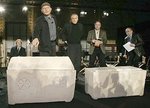
It doesn't get bigger than this," said Titanic director James Cameron, standing in front of a 2000-year-old stone box which he claimed contained the remains of Jesus Christ.

JC had found JC. And he had "DNA evidence" to prove it. Not only that, he had next to him a professor of statistics who had calculated that the odds of it being Jesus were 600-1 on.

The box was one of 10 found in 1980 in a cave known as the Talpiot tomb. Five of the boxes were inscribed with names including Jesus, Mary, Joseph and Mary Magdalene.

After being approached by the makers of a new film called The Lost Tomb of Christ - of which Cameron is executive producer - Dr Andrey Feuerverger, a mathematician at the University of Toronto, performed a controversial statistical analysis. He examined how often these names appeared in the first century BC and considered the possible number of tombs that might have existed in Jerusalem during that time, a figure he put at 1000.

His conclusion? "Taking into account the chances that these names would be clustered together in a family tomb the odds on the most conservative basis are 600 to one in favour of this being the Jesus family tomb." In other words, he said, the chances of the tomb not being that of Jesus's family were 600 to one.

It sounds impressive. But when I put the figures to a respected independent statistician, he wasn't so sure. "The figure of 600 to one is highly misleading," says Colin Aitken, professor of forensic statistics at Edinburgh University. "The calculation is based on a number of assumptions. The first is that there is a tomb of Jesus. For many people, including Christians, that's a non-starter. Then are we assuming that Jesus and his whole family lived their entire lives and died in Jerusalem? And the figure of 1000 graves doesn't seem very many.

"Furthermore, even if we accept the assumptions, 600 to one is certainly not the odds in favour of this tomb being Jesus," adds Aitken. "To explain why not, let me give you a criminal analogy. If you went to a crime scene, found a DNA sample, and then found a suspect whose DNA was a one in 600 chance of a match, it would not follow that the odds were 600 to one on them being guilty."

So what, if anything, does this 600 figure mean? "If you accept the assumptions, the 600 figure simply means the probability that the tomb belongs to Jesus is now 600 times more likely than it was before. But, given the odds before were probably minuscule, to multiply it by 600 doesn't make it particularly likely."

Still, let's suppose for a moment that the odds are correct and that, no matter how unlikely, this is in fact the tomb of Jesus. Do we now have a sample of the DNA of Christ?

After performing a DNA test on residue taken from the tombs, a laboratory in Ontario concluded that the bodies in two ossaries marked "Jesus" and "Mary Magdalene" were not related on their mother's side. From this, the film-makers deduce Jesus and Mary Magdalene were a couple, because otherwise they would not have been buried together in a family tomb. But not only does that contradict one of the central tenets of Christian belief; it is scientifically implausible, according to one of the world's leading experts in ancient DNA.

Dr Ian Barnes of Royal Holloway, University of London, says: "DNA degrades over time. At high temperatures, it degrades even faster. I've worked in the Middle East we did not have any success even a few hundred years back, let alone 2000 years.

"What worries me most is that the sample they took was not from bones. That may be acceptable in a criminal investigation, where the crime scene is only a few years old, but this is a 2000-year-old tomb. The potential for contamination is clearly enormous. It is highly possible that the DNA belongs to someone who excavated the tomb, or even someone in the lab carrying out the tests. That to me would seem far more likely.

"Most disappointing of all, we still don't know who Jesus's father is, because they didn't test his Y chromosome. Was it God or the Holy Spirit? I for one am very disappointed."