Wednesday, March 14, 2007

'Jesus tomb' film factually inaccurate - scholar

AP

Occupied Jerusalem: A scholar looking into the factual basis of a popular but widely criticised documentary film that claims to have located the tomb of Jesus yesterday said that a crucial piece of evidence filmmakers used to support their claim is a mistake.

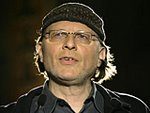
Stephen Pfann, a textual scholar and paleographer at the University of the Holy Land in Jerusalem, said the makers of The Lost Tomb of Jesus were mistaken when they identified an ancient ossuary from the cave as belonging to the New Testament's Mary Magdalene.

The scholars who analysed the inscription on one of the ossuaries read it as "Mariamene e Mara," meaning "Mary the teacher" or "Mary the master." Director Simcha Jacobovici said that particular inscription provided crucial support for his claim.

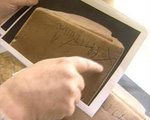
The inscription, Pfann said, is made up of two names inscribed by two different hands: the first, "Mariame," was inscribed in a formal Greek script, and later, when the bones of another woman were added to the box, another scribe using a different cursive script added the words "kai Mara," meaning "and Mara." Mara is a different form of the name Martha.

According to Pfann, the ossuary did not house the bones of "Mary the teacher," but rather of two women, "Mary and Martha."

'Lost Tomb' begins, ends with no credibility


"The Lost Tomb of Jesus" undermines its own case within the first minute of the show. They say, "The Gospels tell us he was buried in a tomb and two days later Mary Magdalene, one of his closest disciples, found the tomb empty. But according to the Gospel of Matthew, there was another story circulating after Jesus' death. And though the Gospel calls it a lie, there was rumor that Jesus' disciples secretly took their master's body, presumably to give him a permanent burial."
Here they offer contradicting facts from the same source. Which is true? Did Jesus rise again or was his body stolen? If they choose the first option, the show is over. Even though their source (the book of Matthew) calls the second option a lie, they believe this to be true and build their case around it. If the biblical account is fully accurate, then this refutes their find. If it is fiction, it doesn't help them because they can't draw on it for evidence to support their case. Given this, how can any credibility be given to the show?

They fail miserably in trying to prove his body was there by using maternal DNA testing. Why not test the DNA of Mary and Judah in relation to the DNA of Jesus? If they tested Jesus and his mother Mary and found no match, they fail to prove their point. Yet they chose to test the DNA between Jesus and Mary Magdalene. This proved they weren't brother and sister, so they presumed they were married. The DNA test doesn't provide evidence that this is the Jesus of the Gospels, as they want us to believe.

Perhaps the most damage done to their case is when they misquote the Scriptures to prove their point. They say that Mary Magdalene was one of Jesus' closest disciples. The Bible never makes such a claim. They suggest that Jesus said the book of Jonah was the key to his ministry. Jesus never referred to this book as "the key to his ministry." While on the cross, they claim that Jesus was telling his wife to take care of their son. Yet the Gospel of John clearly says he was speaking to his mother.

They begin and end their case with a lot of ifs. If this is Jesus the son of Joseph and if this is Mary his mother, and if this is Joseph his brother, and if this is Mary Magdalene. They begin their case with ifs, but in order to convince us their findings are true, they should end with undisputable facts and not just assumptions. The show did more to damage its own credibility than the credibility of the Bible.

Scholar disputes inscription on “Jesus tomb” box

by Nancy Reyes on 14 March, 2007

The documentary on the so called “Jesus tomb” made several technical errors in their interpretation of the inscription of the bonebox they insist was Mary Magdalen’s bonebox, says one scholar.
The documentary claims that scholars read the inscription on one box as “Mariamene e Mara,” meaning “Mary the teacher” or “Mary the master.”
However, Stephen Pfann, a textual scholar and paleographer at the University of the Holy Land in Jerusalem, claims that an analysis of the inscription shows that there were two names written by two different hands, and that the names were Mary and Martha.
He published the inscription on his website which clearly shows that the letters that the two parts of the inscription have in common indeed are shaped differently, so were probably inscribed by a different hand. The article also notes that it was common to combine the bones of several people in the same box.Instead of answering the criticism with experts in paleography, or providing the names and expertise of those he had interpret the inscriptions, Jacobovici merely dismisses the criticism as scholars discomfort with journalists “casting light into their ossuary monopoly.”
Yup. When you can’t dismiss the facts, criticize the expert’s motives.
There are, of course, other criticisms by both archeologists and biblical scholars of the claims, but this one is critical, since it is hard evidence rather than evidence based on statistics or probability. Indeed, it resembles the “Dan Rather” scandal, where experts in fonts and printing were the first ones to point out that forgery.
After all, one can have opinions which Jesus was buried in the tomb, or if the Romans were so incompetent that they never bothered to open the tomb to stop the growth of a annoying sect, but it’s hard to argue with an expert on handwriting, especially when the difference in the inscriptions is obvious even to an untrained observer.

Scholar: 'Jesus Tomb' Makers Wrong

By Matti Friedman
March 14, 2007 7:57AM
Digg It! Bookmark to del.cio.us

Despite widespread ridicule from scholars, "The Lost Tomb of Jesus" drew more than 4 million viewers when it aired on the Discovery Channel on March 4. The film suggests that a first-century ossuary found in a south Jerusalem cave in 1980 contained the remains of Jesus, contradicting the Christian belief that he was resurrected and ascended to heaven.
A scholar looking into the factual basis of a popular but widely criticized documentary that claims to have located the tomb of Jesus said Tuesday that a crucial piece of evidence filmmakers used to support their claim is a mistake.
Stephen Pfann, a textual scholar and paleographer at the University of the Holy Land in Jerusalem, said he has released a paper claiming the makers of "The Lost Tomb of Jesus" were mistaken when they identified an ancient ossuary from the cave as belonging to the New Testament's Mary Magdalene.
The film's director, Simcha Jacobovici, responded that other researchers agreed with the documentary's conclusions.
Produced by Oscar-winning director James Cameron, the documentary has drawn intense media coverage for its claims challenging accepted Christian dogma.
Despite widespread ridicule from scholars, "The Lost Tomb of Jesus" drew more than 4 million viewers when it aired on the Discovery Channel on March 4. A companion book, "The Jesus Family Tomb," has rocketed to sixth place on The New York Times nonfiction best-seller list.
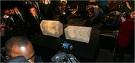
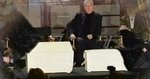
The film and book suggest that a first-century ossuary found in a south Jerusalem cave in 1980 contained the remains of Jesus, contradicting the Christian belief that he was resurrected and ascended to heaven. Ossuaries are stone boxes used at the time to store the bones of the dead.
The filmmakers also suggest that Mary Magdalene was buried in the tomb, that she and Jesus were married, and that an ossuary labeled "Judah son of Jesus" belonged to their son.
The scholars who analyzed the Greek inscription on one of the ossuaries after its discovery read it as "Mariamene e Mara," meaning "Mary the teacher" or "Mary the master."
Before the movie was screened, Jacobovici said that particular inscription provided crucial support for his claim. The name Mariamene is rare, and in some early Christian texts it is believed to refer to Mary Magdalene.
But having analyzed the inscription, Pfann published a detailed article on his university's Web site asserting that it doesn't read "Mariamene" at all.
The inscription, Pfann said, is made up of two names inscribed by two different hands: the first, "Mariame," was inscribed in a formal Greek script, and later, when the bones of another woman were added to the box, another scribe using a different cursive script added the words "kai Mara," meaning "and Mara." Mara is a different form of the name Martha.
According to Pfann's reading, the ossuary did not house the bones of "Mary the teacher," but rather of two women, "Mary and Martha."
"In view of the above, there is no longer any reason to be tempted to link this ossuary ... to Mary Magdalene or any other person in biblical, non-biblical or church tradition," Pfann wrote.
In the interest of telling a good story, Pfann said, the documentary engaged in some "fudging" of the facts.
"James Cameron is a great guru of science fiction, and he's taking it to a new level with Simcha Jacobovici. You take a little bit of science, spin a good yarn out of it and you get another 'Terminator' or 'Life of Brian,'" said Pfann, who briefly appeared as an ossuary expert in the documentary.
In Israel on Tuesday for a screening of the film, the Toronto-based Jacobovici welcomed Pfann's criticism, saying "every inscription should be re-examined."
But Jacobovici said scholars who researched the ossuary in the past agreed with the film's reading. "Anyone who looks at it can see that the script was written by the same hand," he added.
Jacobovici has faced criticism much tougher than Pfann's academic critique. The film has been termed "archaeo-porn," and Jacobovici has been accused of "pimping the Bible."
Jacobovici attributes most of the criticism to scholars' discomfort with journalists "casting light into their ossuary monopoly."
"What we're doing is democratizing this knowledge, and this is driving some people crazy," he said.

Tuesday, March 13, 2007

Letters: The evidence easily debunks 'Jesus tomb' theory

By THURBER D. PROFFITT, III, PH.D.

The sensationalists are at it again this Easter season, claiming they have found Jesus' tomb "Digging up doubt," Nation& World, Feb. 27]. In 2006, an Italian took a priest to court to prove Jesus never lived. Jesus Seminar theologian John Dominic Crossan says Jesus was not buried. Another believes he survived the crucifixion. Some Muslims contend he is buried in Kashmir.
So what is the truth? For starters, Jesus of Nazareth is a historical person. The pagan Roman historians Tacitus ("Annals," AD 115) and Suetonius ("Lives of the Twelve Caesars," A.D. 125 ) mention him as a real person. So, too, the historian Flavius Josephus refers to Jesus in a contested passage, as does the Talmud, which are Jewish sources. Then there are the gospels, earlier Jewish and Gentile sources.
We have only one biography of Socrates, a late copy at that, but no one questions his historicity, so why question Jesus' historicity or, for that matter, the historicity of the events surrounding Jesus' trial and punishment, for in these cases there are more early attesting sources than for Socrates.
Jesus' trial and punishment were par for the course during the first century. Josephus' account tells of a Jewish prophet who died in the siege of Jerusalem after having been arrested by leading citizens. He was beaten and turned over to a Roman governor, who beat him again in lieu of crucifixion before releasing him, as the Roman Procurator Pontius Pilate had sought to do with Jesus of Nazareth.
Jesus was crucified, killed by suffocation, bleeding, low blood pressure and possibly heat stroke and dehydration. Those who claim he did not die on the cross do not take Roman capital punishment seriously. Only one person is known to have survived crucifixion, one of three friends whom Josephus asked the Romans to release from their crosses. Furthermore, the evidence of a Roman graffito [ancient drawing or writing etched on a wall or other surface]depicts Jesus as a crucified ass. The arguments and evidence suggest that we have no reason to believe Jesus was not dead when he was buried.
J.D. Crossan believes Romans fed crucified criminals to the dogs, hence no burial. Yet the crucified remains of a first-century Jew tell a different tale, and Josephus says that Jewish victims of crucifixion were always buried before sundown.
Some question whether Joseph of Arimathea could request Jesus' body to bury him that quickly. That Josephus could document requests for burial before sundown in the case of crucified Jews suggests Joseph of Arimathea could request Jesus' body also – it depended on whether one had the connections to do so.
Some question if Jesus could be buried in a borrowed tomb. As to this, we have an inscription from Rome by one Sextus Marianus Romulus against unauthorized burials in his family tomb. Thus tombs could be borrowed, with or without permission
Then there is the Nazareth decree/inscription, usually dated to the reign of Claudius (A.D. 41-45), against grave robbing. Why such an inscription in Palestine? Why, indeed, unless the tomb was empty.
Finally there is the expectation in ancient Judaism that the resurrection would occur at the end, not in the middle of history. Why would Second-Temple Jewish men accept women's testimony that Jesus had been resurrected? Why indeed? This belief in Jesus' resurrection set the Jesus messianists apart from other Jewish messianists. This is the real Easter story, that Jesus' bones wouldn't be found in a tomb.
So what of the ossuary [stone boxes for burial of human bones]referred to in the article, "Digging up doubt"? Has the family tomb of Jesus been found? Since 1940, four ossuaries bearing the name Yeshua have been found. Not being a native Jerusalemite, one would expect, in keeping with Second Temple convention, that the name would read Yeshua bar Yosef of Natzaret (or Capernaum, the Galil, or Bethlehem). Furthermore, family tombs were usually in the family's hometown, which was not Jerusalem in the case of Jesus of Nazareth. Only the wealthy or upper middle class could afford rock-hewn tombs, and only in such are ossuaries found. Jesus was not wealthy.
So, yes, Jesus' family tomb has been found, but which Jesus? Certainly not the Jesus associated with Easter.

Scholar: 'Jesus Tomb' makers mistaken

Says ancient ossuary did not belong to New Testament's Mary Magdalene
By Matti Friedman
The Associated Press

Updated: 7:21 p.m. ET March 13, 2007

JERUSALEM - A scholar looking into the factual basis of a popular but widely criticized documentary that claims to have located the tomb of Jesus said Tuesday that a crucial piece of evidence filmmakers used to support their claim is a mistake.
Stephen Pfann, a textual scholar and paleographer at the University of the Holy Land in Jerusalem, said he has released a paper claiming the makers of "The Lost Tomb of Jesus" were mistaken when they identified an ancient ossuary from the cave as belonging to the New Testament's Mary Magdalene.
The film's director, Simcha Jacobovici, responded that other researchers agreed with the documentary's conclusions.
Produced by Oscar-winning director James Cameron, the documentary has drawn intense media coverage for its claims challenging accepted Christian dogma.
Despite widespread ridicule from scholars, "The Lost Tomb of Jesus" drew more than 4 million viewers when it aired on the Discovery Channel on March 4. A companion book, "The Jesus Family Tomb," has rocketed to sixth place on The New York Times nonfiction best-seller list.
The film and book suggest that a first-century ossuary found in a south Jerusalem cave in 1980 contained the remains of Jesus, contradicting the Christian belief that he was resurrected and ascended to heaven. Ossuaries are stone boxes used at the time to store the bones of the dead.
The filmmakers also suggest that Mary Magdalene was buried in the tomb, that she and Jesus were married, and that an ossuary labeled "Judah son of Jesus" belonged to their son.
The scholars who analyzed the Greek inscription on one of the ossuaries after its discovery read it as "Mariamene e Mara," meaning "Mary the teacher" or "Mary the master."
Before the movie was screened, Jacobovici said that particular inscription provided crucial support for his claim. The name Mariamene is rare, and in some early Christian texts it is believed to refer to Mary Magdalene.
But having analyzed the inscription, Pfann published a detailed article on his university's Web site asserting that it doesn't read "Mariamene" at all.
The inscription, Pfann said, is made up of two names inscribed by two different hands: the first, "Mariame," was inscribed in a formal Greek script, and later, when the bones of another woman were added to the box, another scribe using a different cursive script added the words "kai Mara," meaning "and Mara." Mara is a different form of the name Martha.
According to Pfann's reading, the ossuary did not house the bones of "Mary the teacher," but rather of two women, "Mary and Martha."
"In view of the above, there is no longer any reason to be tempted to link this ossuary ... to Mary Magdalene or any other person in biblical, non-biblical or church tradition," Pfann wrote.
In the interest of telling a good story, Pfann said, the documentary engaged in some "fudging" of the facts.
"James Cameron is a great guru of science fiction, and he's taking it to a new level with Simcha Jacobovici. You take a little bit of science, spin a good yarn out of it and you get another 'Terminator' or 'Life of Brian,'" said Pfann, who briefly appeared as an ossuary expert in the documentary.
In Israel on Tuesday for a screening of the film, the Toronto-based Jacobovici welcomed Pfann's criticism, saying "every inscription should be re-examined."
But Jacobovici said scholars who researched the ossuary in the past agreed with the film's reading. "Anyone who looks at it can see that the script was written by the same hand," he added.
Jacobovici has faced criticism much tougher than Pfann's academic critique. The film has been termed "archaeo-porn," and Jacobovici has been accused of "pimping the Bible."
Jacobovici attributes most of the criticism to scholars' discomfort with journalists "casting light into their ossuary monopoly."
"What we're doing is democratizing this knowledge, and this is driving some people crazy," he said.

Saturday, March 10, 2007

'Jesus tomb' statistics don't add up, biblical scholars say

By Michael Foust
Baptist Press

http://www.bpnews.net/bpnews.asp?ID=25149

NASHVILLE, Tenn. (BP)--An often-quoted statistic behind the so-called “Jesus tomb” is inflated and based on false assumptions, leading biblical scholars say. “The Lost Tomb of Jesus” documentary aired on the Discovery Channel March 4, claiming a tomb in Jerusalem once housed the bones of Jesus and his family and that the odds of it not being Christ's tomb are only 1 in 600. That statistic has formed the core of the argument for the program's backers, who say the likelihood of finding another tomb with ossuaries containing the inscriptions “Jesus son of Joseph,” “Mary,” “Mariamene e Mara” and “Jose” is slim. The documentary said “Mary” was Jesus' mother, “Mariamene” his wife Mary Magdalene, and Jose his brother. Two other ossuaries found in the tomb -- those of a Matthew and a “Judah son of Jesus” -- also were members of Jesus' family, with Matthew being of an unknown relation and Judah being the son of Christ and Mary Magdalene, the documentary claimed. (The statistic, though, did not include Matthew or Judah in the formula.)The overwhelming majority of archaeologists and scholars have refuted the claims, and the statistician behind the numbers -- Andrey Feuerverger of the University of Toronto -- posted a statement on the school's website saying his statistic “depend[s] heavily on the assumptions that go into it.” Among those assumptions, Feuerverger said, are that “Jose” is the brother of Christ referenced in Mark 6:3 and is not the “Joseph” referenced on the Jesus ossuary. (Jose is a nickname for Joseph.) But most significantly, Feuerverger said, the statistic assume that “Mariamene” is Mary Magdalene, even though she is not given such a name in the New Testament, and even though the New Testament says nothing about Christ being married and implies strongly He wasn't. Putting Mariamene in the formula “drives the outcome of the computations substantially,” Feuerverger said. “It is not in the purview of statistics to conclude whether or not this tombsite is that of the New Testament family,” said Feuerverger, who stands by his formula and says it will be published for peers to review. “Any such conclusion much more rightfully belongs to the purview of biblical historical scholars who are in a much better position to assess the assumptions entering into the computations.”In fact, one religious scholar, Louisiana College's Charles Quarles, put together his own statistics -- excluding Mariamene since he believes the evidence is overwhelmingly against her being Mary Magdalene -- and came up with something very different from Feuerverger. Quarles says between 56 and 105 males in Jerusalem during Jesus' time would have had a father named Joseph and close relatives named Mary and Jose. Thus, according to Quarles, it is very unlikely the tomb belongs to Christ -- even if one discounts the bodily resurrection.Both sides of the debate acknowledge the names on the ossuaries were common for the time. Roughly one-fourth to one-fifth of all women were named “Mary.” “Joseph” was the second most common male name, “Jesus” the sixth. Feuerverger's formula included a 1 in 4 chance that a woman at the time would be named Mary, and a 1 in 20 chance that a man would be named Jose. He put the odds at a Jesus being the son of a Joseph at 1 in 190, and the odds of a “Mariamene e Mara” being found at 1 in 160. Putting all the numbers together in a formula, Feuerverger came up with the 1 in 600 stat. (Such odds about first-century names are based on a database of approximately 3,000 known people at the time.) The name “Jesus son of Joseph” on an ossuary is rare, but not a first; at least one other one has been found elsewhere. But it is the odds Feuerverger placed on the Mariamene ossuary that have many scholars scratching their heads.The documentary interpreted the “Mariamene e Mara” ossuary, which is in Greek, as reading, “Mary, known as Master.” That specific translation changed the odds from a relatively unimpressive number to the aforementioned long odds of 1 in 160, since those associated with the documentary said it was a rare find. But Richard Bauckham, professor of New Testament at the University of St. Andrews in Scotland, disagrees with the translation. “'Mara' in this context does not mean Master,” Bauckham wrote in a statement posted on several scholarly weblogs. “It is an abbreviated form of Martha. Probably the ossuary contained two women called Mary and Martha (Mariamne and Mara).”Craig Blomberg, professor of New Testament at Denver Seminary, also disagrees with the documentary's translation and believes the inscription likely is one person named “Mary Martha.” Either Bauckham's or Blomberg's interpretation would change the statistical formula dramatically and lower the odds, since Martha was the fourth most popular female name at the time, and Mara the eighth. Dozens of such common names on ossuaries have been found.The documentary tied the “Mariamene” with Mary Magdalene by using a non-biblical document, the Acts of Philip, which was written several hundred years after Christ and which references a “Mariamene.” But Quarles says the document never identifies Mariamene as Mary Magdalene but simply calls her the sister of Philip. More importantly, Quarles said, the New Testament never calls Mary Magdalene “Mariamene.”Scholars say there are other problems with the documentary's claim that would have impacted the statistical formula: -- Jose's ossuary does not list him as a son of Joseph, while the Jesus ossuary does. The documentary claimed Jose and Jesus were brothers and sons of Joseph. If Jose is taken out of the formula, it would lower Feuerverger's odds. “[T]he lack of the 'son of Joseph' description significantly decreases the probability that Yeshua and Jose were siblings,” Quarles wrote in an analysis.Additionally, the other brothers and sisters of Jesus listed in Mark 6:3 are missing from the tomb. That verse lists four brothers -- James, Joses, Judas (not the traitor) and Simon -- as well as an untold number of unnamed sisters. -- Jose (short for Joseph) may have been the father of the Jesus in the tomb, Quarles said, and not the brother. If true, then Jose was listed twice in the formula, incorrectly raising the odds.-- Judah and Matthew are not listed as Jesus' family members in the New Testament. Some scholars say that fact alone should invalidate the documentary's claim, much less the statistical formula. There is no historical evidence for Christ having a son.-- Jesus was not known as the son of Joseph by his family or disciples. Writing on his blog, Ben Witherington III, professor of New Testament at Asbury Theological Seminary in Wilmore, Ky., quotes Luke 3:21, which says Jesus was only the “supposed” son of Joseph.“Supposed by whom? Clearly not by Luke or the family whom Luke has just shown knew about the virginal conception of Jesus,” Witherington wrote. “Even the cousins knew about this miracle when Mary told Elizabeth. There can be no good reason Luke would put it this way if he knew the earliest followers of Jesus or members of his family had thought that Jesus was son of Joseph.”-- The Jesus ossuary does not say Jesus but possibly “Hanun,” according to Stephen Pfann, a biblical scholar at the University of the Holy Land as quoted in the Associated Press. That, obviously, would end the debate for good.Christians, Quarles said, should not discount the claims of the documentary but instead should “appeal to the compelling eyewitness accounts of the resurrection” in the New Testament -- which he notes are the oldest and most reliable accounts -- and then “carefully scrutinize the exaggerated, illogical, and poorly substantiated claims” of the documentary and its accompanying book, “The Jesus Family Tomb.”“The sensational claims of The Jesus Family Tomb will be major news for some time and this book and film, like the Da Vinci Code, will provide informed believers with an excellent opportunity to present the compelling evidence for Jesus’ bodily resurrection, an essential element of our Christian faith (Romans 10:9),” Quarles wrote. “But let’s 'make no bones about it,' the bones in the Talpiot tomb were not the bones of Jesus of Nazareth.”--30--Quarles complete paper is available online at:http://www.lacollege.edu/ifl/jesus_tomb.pdf

Friday, March 9, 2007

Odds of 'Lost Tomb' Being Jesus' Family Rest on Assumptions

By CARL BIALIK
THE NUMBERS GUY

http://online.wsj.com/public/article/SB117338464249431351-0ghR_0Jef5ubo6ZLbYIVoePRxrA_20070408.html?mod=tff_main_tff_top

Until two weeks ago, University of Toronto statistician Andrey Feuerverger's body of research encompassed uncontroversial topics such as medical scanning and correcting for camera blurring.
So he was unprepared for the reaction to his work for the Discovery Channel documentary "The Lost Tomb of Jesus," which aired on Sunday. The tomb is a set of 10 limestone coffins, or ossuaries, found in Jerusalem in 1980, bearing the names Yeshua bar Yosef (Jesus, son of Joseph), Maria (Mary), Matia (Matthew), Yose (a nickname for Joseph), Mariamene e Mara (a form of Mary) and Yehuda bar Yeshua (Judah, son of Jesus). Prof. Feuerverger calculated there is just a one-in-600 chance that those same names would have come together in a family that didn't belong to Jesus of Nazareth.
That calculation helped propel the already explosive story. "It was really the thing that began to convince us all to give this more attention," says James Tabor, chair of religious studies at the University of North Carolina, Charlotte, who advised the filmmakers and Prof. Feuerverger, and appears in the two-hour documentary.
But the one-in-600 calculation is based on many assumptions about the prevalence of the names and their biblical significance. For purposes of his calculations, Prof. Feuerverger relied on new scholarly research that links the inscription "Mariamene e Mara" with a name for Mary Magdalene. (The filmmakers suggest that she was Christ's wife and that they are buried with a son, Judah -- claims hotly denounced by traditional Christians.)
Had the professor assumed the inscription could be for any Mary, a very common name then, it would be far less likely that Christ's family is in the tomb. The mathematical finding would become "statistically not significant," Prof. Feuerverger tells me. Similarly, the name "Yose" -- as one of Jesus' four brothers was called in the Gospel of Mark -- is a derivative of Yosef, another common name. There, too, the finding would be less conclusive if the professor had considered "Yose" applicable to any Yosef.
Even if there was consensus on the interpretation of the names, there are no comprehensive records showing how frequently they occurred in the population at that time. Prof. Feuerverger relied on modern books about ossuaries and ancient texts to tally the occurrence of certain names in the area then. That falls far short of a complete census.
"As you pile on more assumptions, you're building a house of cards," says Keith Devlin, a Stanford mathematician and NPR's "Math Guy." (Scientific American also challenged the calculation on its Web site.)
No one is questioning Prof. Feuerverger's statistical credentials, or his calculation given the assumptions made. For each of the names believed to be appropriate for Jesus or an associate, Prof. Feuerverger calculated the probability it would arise by chance, then adjusted for other factors, such as the number of tombs in Jerusalem. But his conclusion is only as reliable as the assumptions that went into it.
"I wouldn't be comfortable coming up with a number like this, because the general audience will not understand that it is very, very subjective," says Ivo Dinov, assistant professor of statistics at the University of California, Los Angeles.
The case is far from closed on this tomb. Prof. Feuerverger, who says he was paid a "nominal" sum for his work, had signed a nondisclosure agreement with Associated Producers, barring him from describing the project and so limiting his ability to run his work by his peers. He still hasn't provided full documentation of his calculation, saying he'd wait until his paper, not yet completed, is accepted by a journal. "There is a mismatch between how the media works and how academia works," Prof. Feuerverger says. "Obviously it would have been a whole lot better if I had completed the paper" before the documentary aired.
Writer-director Simcha Jacobovici says he went to great lengths to find a responsible number. Initial, "ballpark" calculations based on the incidence of the names -- including one made by Charles Pellegrino, co-author of the documentary's companion book -- found even smaller probabilities that the tomb wasn't that of Jesus' family. Mr. Jacobovici then turned to the University of Toronto, down the street from his production offices, and tapped Prof. Feuerverger to do the calculations with greater rigor. "We told him Charlie came out with 2.4 million to 1," Mr. Jacobovici says. "He said, the numbers will come out where the numbers come out."
All this has brought some measure of distress to Prof. Feuerverger, who nevertheless says he thinks the experience will strengthen him as a human being, and as a statistician. "When I was doing the calculation, I was naively unaware of the extent to which the filmmakers might be depending on the ultimate result of it," he says. "I did carry out the calculation in every good faith. I hoped it would be interpreted in that light."

Jerusalem bishop: Film on Jesus tomb 'should just be ignored'

By Dennis O'Connor

http://www.the-tidings.com/2007/030907/tomb.htm

Auxiliary Bishop Giacinto-Boulous Marcuzzo of Jerusalem called James Cameron's Discovery Channel documentary, "The Lost Tomb of Jesus," nothing more than "a question of business."
Bishop Marcuzzo said that the film, which aired March 4 in the United States and March 6 in Canada, was just an attempt by the Oscar-winning director of Hollywood films "Titanic" and "The Terminator," to make a profit.
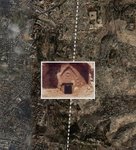
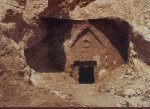
In a March 1 interview in Nazareth, the bishop said the documentary has the potential for creating confusion among the faithful by purporting that a tomb discovered nearly 30 years ago in Jerusalem's East Tlpiyot neighborhood contained the bones of Jesus, Mary Magdalene and their "son," Judah.
"People of faith, everyone, really, should dismiss this as nothing but nonsense," he said. "It should just be ignored."
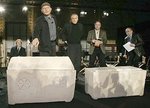
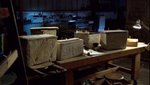
At a press conference in New York City Feb. 26, Cameron, who is Canadian, and his partner, Israeli-born filmmaker Simcha Jacobovici of Toronto, announced that by using new technology and DNA studies they determined that among 10 ossuaries -- burial boxes used in biblical times to house the bones of the dead -- found in the cave by Israeli archaeologist Amos Kloner in 1980 are those of Jesus, his brothers, Mary, another Mary whom they believe is Mary Magdalene, and "Judah, son of Jesus."
Kloner wrote the original excavation report on the site for what is now called the Israel Antiquities Authority. He has called the fimmakers' claim "nonsense."
Bishop Marcuzzo told a visiting U.S. Catholic journalist that the filmmakers have not only distorted the facts to make their case, they have ignored hundreds of years of scholarship and the plethora of archaeological materials that continue to emerge in the Holy Land.
"We are accustomed to finding" artifacts such as these throughout Israel, he said. "This is occurring all the time here. And (the filmmakers) have ignored what Jewish scholars say about the names contained" on the ossuaries, "that they were names very common during that period."
Most important, he said, Cameron, Jacobovici and their consultants failed to account for the archaeological value of oral tradition in determining historical site locations, such as the tomb of Jesus that has always been recognized by the church.
Situated in Jerusalem's Old City at the Church of the Holy Sepulcher, an ancient church was built at the tomb initially in the fourth century by the Roman emperor Constantine after his mother, Helen, identified its location based on local traditions maintained by Christians since the time of Christ's death and resurrection.
"We know where the sepulcher of Jesus is located in Jerusalem," Bishop Marcuzzo said. "This is based on long traditions from both Christian and Jewish sources. I would tell people of faith that they should treat this (film) as nothing but a way to make money."
In the United States, the husband-and-wife team that runs the Turin Shroud Center in Colorado Springs, Colo., said in an interview after watching the program that they saw many inconsistencies that make them skeptical.
"The most reasonable explanation is that they're dealing with some other tomb that has no connection with Christianity," said John Jackson, who with wife Rebecca runs the center, which is dedicated to studying and educating the public on what many believe is the burial cloth of Jesus.
The film "did not have any substance to it, but it is not going to go away very easily," John Jackson, a Catholic, told The Colorado Catholic Herald, newspaper of the Colorado Springs Diocese. "I think the church is going to have to weather the storm."
If the theory put forth by the Discovery Channel program were to prove true, it would be contrary to all the Jacksons have gathered about the cloth.
"I think the Shroud of Turin and this archaeological site cannot both be correct," said John Jackson, a physicist who started studying the shroud in 1974. "The shroud points to resurrection. This site does not. It nullifies the Resurrection and therefore nullifies all of Christianity."
Rebecca Jackson, a convert to Catholicism from Orthodox Judaism and an expert on ethnology and early Judaism, noted inconsistencies with how the ossuaries were named and also doubts the inscriptions would have been made so hastily and sloppily on the side of boxes.
Jewish tradition called for people to be buried in a shroud for one year before having their remains transferred to an ossuary.
"They had a year to work on it. It would have been neat," she said, also noting that floral patterns on the ossuaries are Hellenic and not in line with Jewish custom. "They would have been as traditional and Semitic as possible."